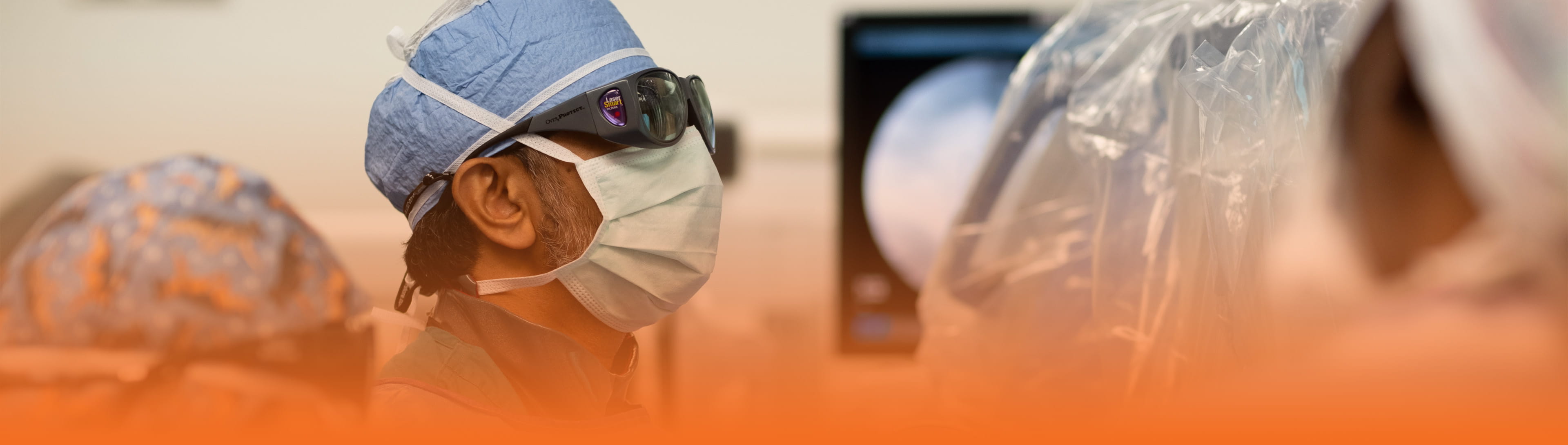
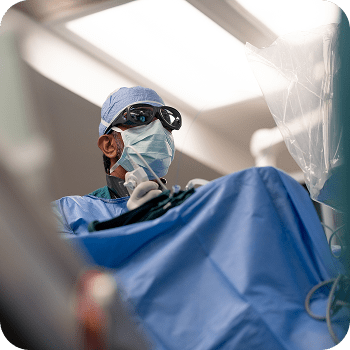
 In March 2025, Arkansas Children’s Urology began using the ClearPetra Stone Aspiration System to remove kidney stones faster and more precisely. While the device is common in adult settings, it is not used as often in pediatrics.
“As we’re breaking up the stones, we can vacuum up small fragments to help minimize residual fragments left in the kidney. It can prevent reoperation for leftover stones in children,” said Ashay Patel, D.O., a pediatric urologist and chief of urology at Arkansas Children’s and associate professor of urology at the University of Arkansas for Medical Sciences. “When we complete a surgery, we may re-image them in two or three months, and ideally, at that time, the stones wouldn’t have redeveloped, or there isn’t any leftover debris that we have to worry about.”
The ClearPetra Ureteral Access Sheath (hydrophilic coated) is used for kidney and bladder stones. Dr. Patel said the team performs two to three pediatric kidney stone removals monthly. As of August 2025, the team had used the device seven times. The device is not needed for every stone removal.
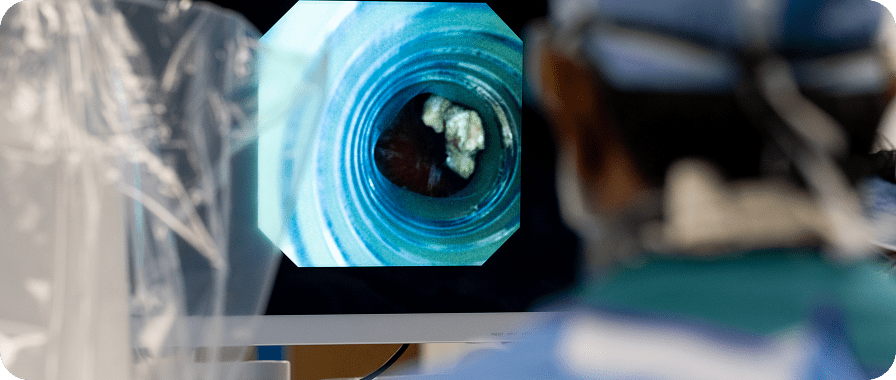
Kidney stones are traditionally removed with passive gravity, where the irrigation fluid slowly flows out during the surgery, clearing the stones. With the aspiration system, there’s passive and active suctioning so small fragments can be pulled out inside the sheath and collected in a container. It enables quicker surgeries, better visualization, lower intrarenal pressure and less basketing.
“The device helps minimize any leftover fragments during kidney stone removal,” Dr. Patel said. “Instead of relying on small fragments to be trapped in the basket during the ureteroscopy, this device allows us to suction them out while moving throughout the kidney.”
The device has a 45-degree oblique branch with the main sheath that connects to the suction tool. A vortex is created at the end of the sheath. The mechanism allows the surgeon to adjust suction pressure and remove irrigation fluid, stone fragments, dust and blood for a clearer view.