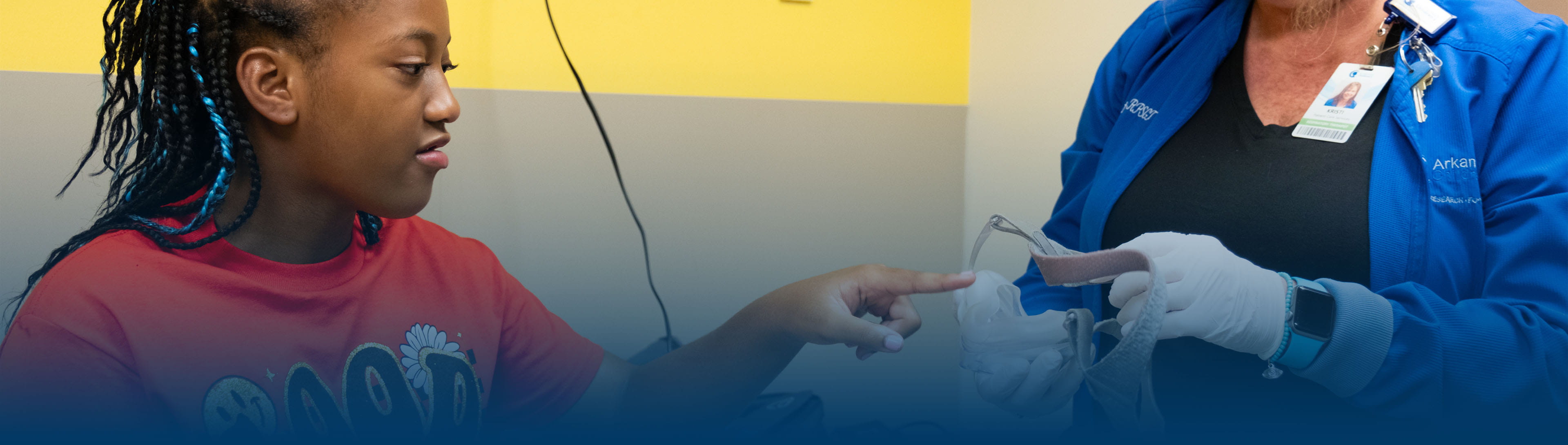
Building on an established foundation of care in the Arkansas Children’s Pediatric Sleep Disorders Center, the Arkansas Children’s Northwest (ACNW) campus in Springdale created a sleep lab, filling the gap in pediatric sleep studies for the upper part of the state and region.
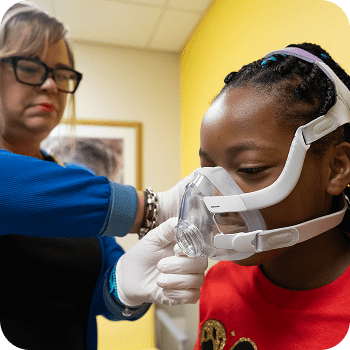 The Arkansas Children’s Northwest Sleep Lab completed its first sleep study on June 9, 2025.
The Arkansas Children’s Northwest Sleep Lab completed its first sleep study June 9, 2025. “The advantage of having a sleep lab in northwest Arkansas is that patients in the area now have access to a more specialized pediatric sleep center locally, thus improving and simplifying their care,” said Supriya Jambhekar, M.D., the medical director of the Pediatric Sleep Disorders Center at Arkansas Children’s and a professor of pediatric pulmonology at the University of Medical Sciences. “There are many patients who have sleep problems that require a sleep study. Historically, many children in this region were referred to adult sleep labs, but pediatric-directed studies are best since sleep studies are performed, scored and interpreted differently for children. Since we opened sleep study appointments, we are already booking into 2026.”
The Arkansas Children’s Pediatric Sleep Disorders Center at Arkansas Children’s Hospital (ACH) in Little Rock is the only child-centered sleep care center in the state, and one of only a few pediatric hospitals nationwide with full-service accreditation from the Association of Sleep Disorders Centers through the American Academy of Sleep Medicine (AASM). It diagnoses and treats several sleep disorders in children, including, but not limited to, obstructive sleep apnea (OSA), insomnia, hypersomnia, restless legs syndrome, parasomnia and circadian rhythm disorders.
Arkansas Children’s Northwest Sleep Lab began the accreditation process in August 2025.
Dr. Jambhekar said prior to establishing the ACNW Sleep Lab, sleep experts in Little Rock conducted telehealth visits and traveled to ACNW. Patients had to travel to Little Rock for sleep studies.
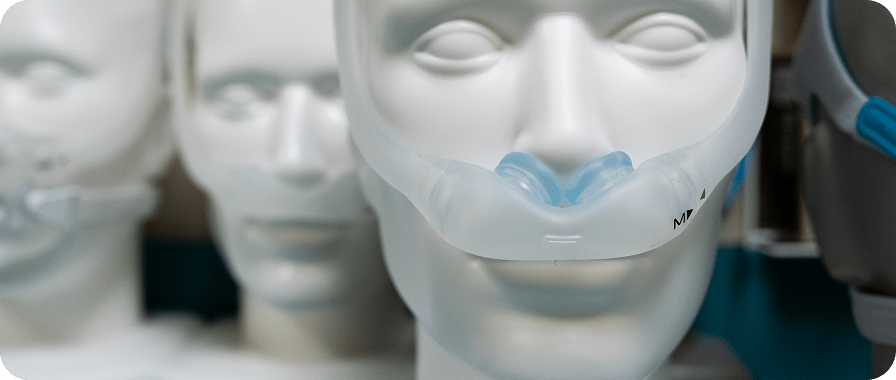
The ACNW Sleep Lab conducts sleep studies at night with and without intervention. Some interventions include continuous positive airway pressure (CPAP) titration, oxygen titration and split-night studies (part of the study with oxygen or CPAP assistance and part without). Specialized studies conducted by a respiratory therapist with polysomnographic training include:
The ACNW Sleep Lab team began with a patient care tech and respiratory therapist, with additional training as a pediatric polysomnographic technologist, or sleep technician with expertise in conducting pediatric sleep studies, scoring them and diagnosing disorders like sleep apnea. The team worked three nights a week, completing six sleep studies. In the fall of 2025, another pediatric polysomnographic technologist was hired, raising the number of sleep studies to 12, conducted six nights a week.
“Having a respiratory therapist who is also a polysomnographic technician is very important. They have the training to do more involved studies like pap titration, oxygen titration, ventilator studies and tracheostomy capping protocol,” Dr. Jambhekar said. “It gives us a much wider range to treat specialized cases.”
Lakeena Harris, a respiratory therapist, has worked at Arkansas Children’s for 28 years. She joined the sleep lab in May 2025 as a registered polysomnographic technologist IV.
“I completed several specialized classes, including learning the 10-20 system, recognizing arrhythmias and monitoring ETCO2 and TcCO2, along with clinical hours to be eligible to take a national board exam,” Harris said. “This extra training allows me to perform CPAP titrations, oxygen and ventilator titrations. Since we are still a new service, we’ve conducted more diagnostic-based studies.”
Sleep studies are also scored differently for children than for adults. During sleep studies, the sleep expert scores each respiratory event, or disruption in breathing. The number of respiratory events and oxygen saturation are measured differently.
“What I would call significant in a child is different from what I would call significant in an adult. In an adult, fewer than five events per hour indicate a normal study; five to 15 events is mild sleep apnea and 15 to 25 events is moderate sleep apnea. Whereas in children, we diagnose one to five events as mild sleep apnea and five to 10 events as moderate sleep apnea. If a child reaches 15 events, it’s severe sleep apnea,” Dr. Jambhekar said. “In children, we see more physiological central apneas, which is uncommon in adults. What I call normal or physiological in children might alarm the adult providers. That may lead to a referral to the pediatric sleep clinic, and sometimes we cannot see their already performed sleep study, as it may be on a different sleep study system. In those cases, we end up duplicating the study, which delays care. It is much more effective for children to see a pediatric sleep expert first.”