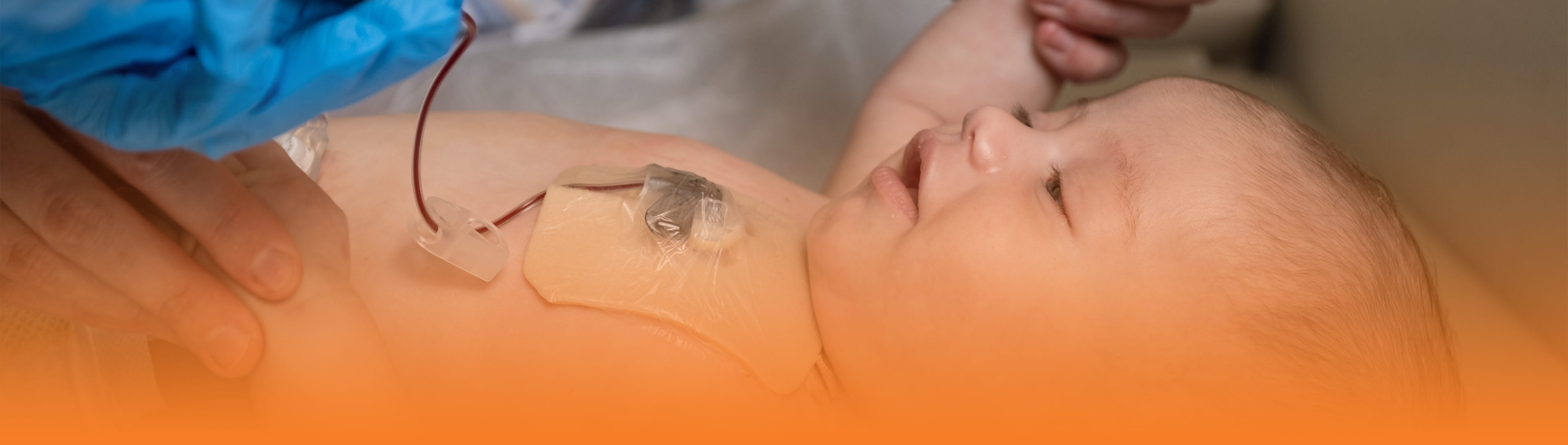
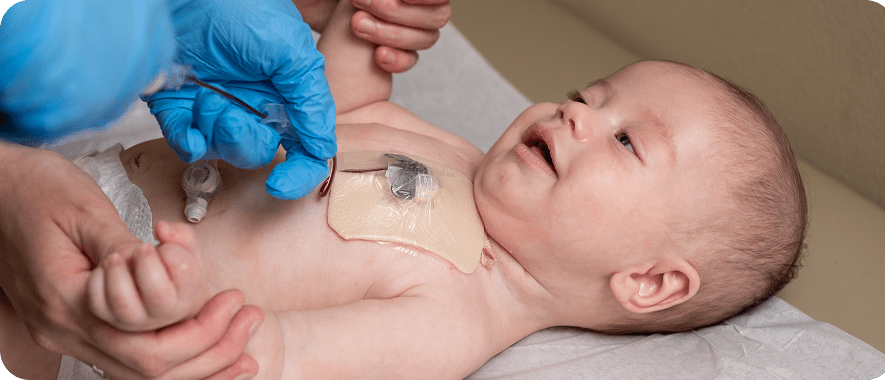
The successful completion of Arkansas Children’s Hospital’s (ACH) first bone marrow transplant (BMT) for a patient with severe combined immunodeficiency (SCID) represents more than a procedural milestone for the hospital — it demonstrates Arkansas Children’s commitment to delivering comprehensive cancer and blood disorders care. The recently expanded BMT program increases access to life-saving therapies that previously required out-of-state travel, strengthening the hospital’s role as a regional leader in pediatric oncology and transplant care.
Smitha Vasanna, M.D., pediatric blood and marrow and cellular therapy physician at Arkansas Children’s and assistant professor of hematology/oncology in the department of pediatrics at the University of Arkansas for Medical Sciences (UAMS), led the transplant alongside a multidisciplinary team that included a pediatric immunologist and several other subspecialists.
“We did not have a matched sibling donor option for this patient,” Dr. Vasanna said. “Fortunately, we found a match from an unrelated donor from the National Marrow Donor Program that was a full 10 out of 10 Human Leukocyte Antigens (HLA) match.”
The incidence of SCID — a group of rare genetic disorders characterized by a severely compromised immune system that leaves infants vulnerable to infections — affects approximately 1 in 58,000 children born in the U.S., with some sub-populations experiencing much higher rates. The number of patients identified with SCID has increased since 2018, when all 50 states made it standard practice to implement newborn screening.
Infections that are typically mild or manageable to most infants can become life- threatening for those born with SCID. In preparation for transplant, the ACH team implemented rigorous infection prevention protocols, including prophylactic antimicrobials and strict isolation measures. To minimize exposure to opportunistic pathogens — particularly mold spores from environmental sources, such as construction sites — care teams enforced controlled contact and environmental safeguards, ensuring maximal protection.
Ideally, BMT for SCID should be performed in a baby’s first 3 to 3.5 months of life, once the infant’s body has matured sufficiently to tolerate the chemotherapy required to eliminate diseased marrow and make room for healthy donor stem cells to engraft and proliferate.
“Transplanting an infant introduces unique challenges due to their small size. They tend to deteriorate more quickly when ill, and their immature organs and metabolism often limit the treatments they can safely tolerate,” Dr. Vasanna said.
Post-transplant infection risk remains high, particularly during the critical early months when immune recovery is incomplete. To ensure rapid intervention and optimal management of potential complications, the Arkansas Children’s team requires patients to reside within a 30-minute radius of the hospital for the first 100 days following transplant.
Before Arkansas Children’s expanded its BMT program, treatment for SCID required families in Arkansas to travel out of state for the transplant and often for the initial post- transplant monitoring — an extended and added burden during already overwhelming circumstances.
As the only pediatric bone marrow transplant center in the state, Dr. Vasanna said, “Getting ‘care closer to home’ has been our motto. It means families can stay near loved ones and avoid the stress of long-distance travel during an incredibly challenging time.”
At the critical three-month juncture, the first patient to receive BMT for SCID in Arkansas met the important benchmarks for engraftment, inspiring the team and establishing a strong foundation for the new program.
Comprehensive Care and Blood Disorders Care
BMT, accepted as the standard of care for most SCID patients, is one of the latest milestones for the Arkansas Children’s cancer and blood disorders team that includes receiving full Foundation for the Accreditation of Cellular Therapy (FACT) accreditation, CAR T-cell certification and partnering with UAMS, Baptist Health and Proton International to open the Proton Center of Arkansas in Little Rock in recent years.
Arkansas Children’s Hospital is also a qualified treatment center for LYFGENIA™ and Zynteglo™, two FDA-approved, single-dose, gene therapy treatments for patients over 12 years of age with sickle cell disease and beta thalassemia major, a significant option for the sickle cell disease patients in the region.
Vote in the next U.S. News & World Report Best Children’s Hospitals survey.
Register to vote in the next U.S. News & World Report Best Children's Hospitals survey.
Vote now >