
 In its first nine months of operation, the Proton Center of Arkansas, which launched in September 2023, treated 21 pediatric patients and over 70 adult patients with proton therapy. The state-of-the-art facility, opened in partnership with the University of Arkansas for Medical Sciences, Baptist Health and Proton International, adds to the nationally ranked pediatric cancer care already available at Arkansas Children’s.
Kevin Bielamowicz, M.D., a pediatric neuro-oncologist, medical director of the Brain Tumor Clinic at Arkansas Children’s and an associate professor in the department of pediatrics at the University of Arkansas for Medical Sciences, said, “Proton radiation treatment has become the standard of care in pediatric patients with solid tumors and brain tumors. It is more precise in targeting radiation to disease sites and minimizes radiation exposure to normal tissue.”
Offering this advanced treatment ensures children in the region can stay close to home while still receiving the highest quality care. The precision available with proton radiation means fewer potential short- and long-term side effects, like damage to nearby organs or tissue. This precision is especially important when treating tumors near the central nervous system and brain in a child’s developing body. Treating tumors near the brain with radiation can impact a child’s neurocognitive capabilities. “If you radiate the brain, their IQ can be lower in the long-term. Proton therapy reduces that risk as well as the risk for second cancers, strokes and endocrine or hormone deficiencies,” Dr. Bielamowicz said.
“Previously, our patients had to go out of state for proton radiation treatment. We’re proud to offer the highest levels of care to patients in the region.”
Dr. Bielamowicz also specializes in treating brain tumors and neuroblastoma, the most common extracranial solid tumor in pediatric patients. While most neuroblastomas begin in the sympathetic nerve ganglia in or around an adrenal gland, a significant number start in the sympathetic ganglia near the spine, in the chest, neck or pelvis. Treating any of those areas with radiation can be problematic, especially in children.
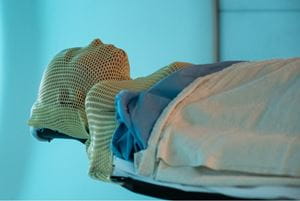
Proton therapy can also reduce risks specific to girls treated with radiation to the abdomen, which can damage the ovaries, affect menstrual cycles and cause difficulties with pregnancy and childbirth.
Access to the latest proton radiation technology allows Arkansas Children’s to participate in a broader range of clinical trials, like those run by the Children’s Oncology Group. The Proton Center of Arkansas is the latest evidence of Arkansas Children’s commitment to pairing the most advanced technology with the most current and experimental treatment options for patients in the region.
During the center’s first year, the Arkansas Children’s cancer care team used proton radiation in the treatment of tumors near the brain, larynx, pelvis and spine, including: