
 Arkansas Children’s — the state’s only Children’s Oncology Group (COG) member institution — provides access to the latest clinical trials for children in the region. Two NIH-funded research initiatives aim to improve long-term outcomes for children and teens with acute lymphoblastic leukemia (ALL). One project focuses on early cognitive assessments to identify neurocognitive effects soon after diagnosis. The second evaluates the impact of structured exercise programs on physical function, fatigue and overall quality of life in children undergoing therapy for ALL. These studies reflect Arkansas Children’s commitment to advancing evidence-based supportive care as an essential component of comprehensive pediatric oncology.
“Identifying Markers of Abnormal Neurocognitive Trajectories during Chemotherapy Treatment of Childhood Acute Lymphoblastic Leukemia” led by Ellen van der Plas, Ph.D., a researcher at Arkansas Children’s Research Institute and associate professor of hematology/oncology at the University of Arkansas for Medical Sciences (UAMS), aims to help leukemia survivors achieve the same quality of life as their peers who have not had cancer by answering the question: “What are the earliest signs of abnormal brain development in children who are newly diagnosed with leukemia?”
With survival rates for pediatric acute lymphoblastic leukemia approaching 95%, attention is shifting to improving the quality of life of survivors after treatment. Many survivors experience lasting cognitive challenges that interfere with daily life because therapies target the brain. The cause of these cognitive issues remains unclear.
“Without identifying the earliest signs of brain changes, we cannot design effective strategies to prevent or reduce these problems,” van der Plas said.
The project has three specific aims:
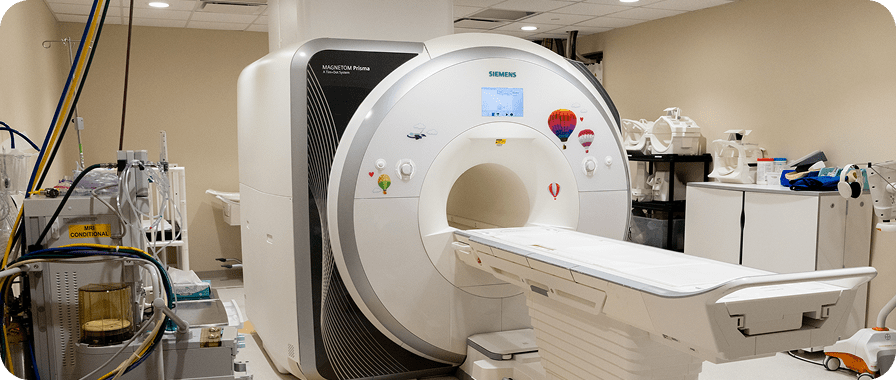
To achieve these goals, children with and without leukemia, ages 3–10, are assessed three times over the course of a year. During each visit, they complete puzzles and games that measure thinking and planning skills and undergo a non-sedated MRI scan. The MRI uses specialized techniques to capture different aspects of the brain, including its structure, connections, activity and chemical makeup. Analysis of leftover cerebrospinal fluid provides data about protein markers of brain injury.
“Initial results suggest some mental functions — such as remembering visual and spatial information, thinking flexibly and controlling impulses — are weaker in children with leukemia compared with healthy peers,” van der Plas said. “We also see that the brain’s white matter, especially in the frontal lobes, shows reduced integrity in leukemia patients compared to peers. In addition, early signs of an ‘energy crisis’ are apparent, with certain brain chemicals elevated while others are reduced.”
The $2.5 million Method to Extend Research in Time (MERIT) award grant provides five years of support with the opportunity for a two-year extension.
Previous research shows that leukemia survivors, even decades after treatment, often exhibit changes in brain structure, particularly in white matter, and experience cognitive difficulties that can affect school and work performance. Building on this knowledge, this project advances the field by identifying some of the earliest brain and cognitive changes that occur during or shortly after treatment.